

Mid/Side without extra routing
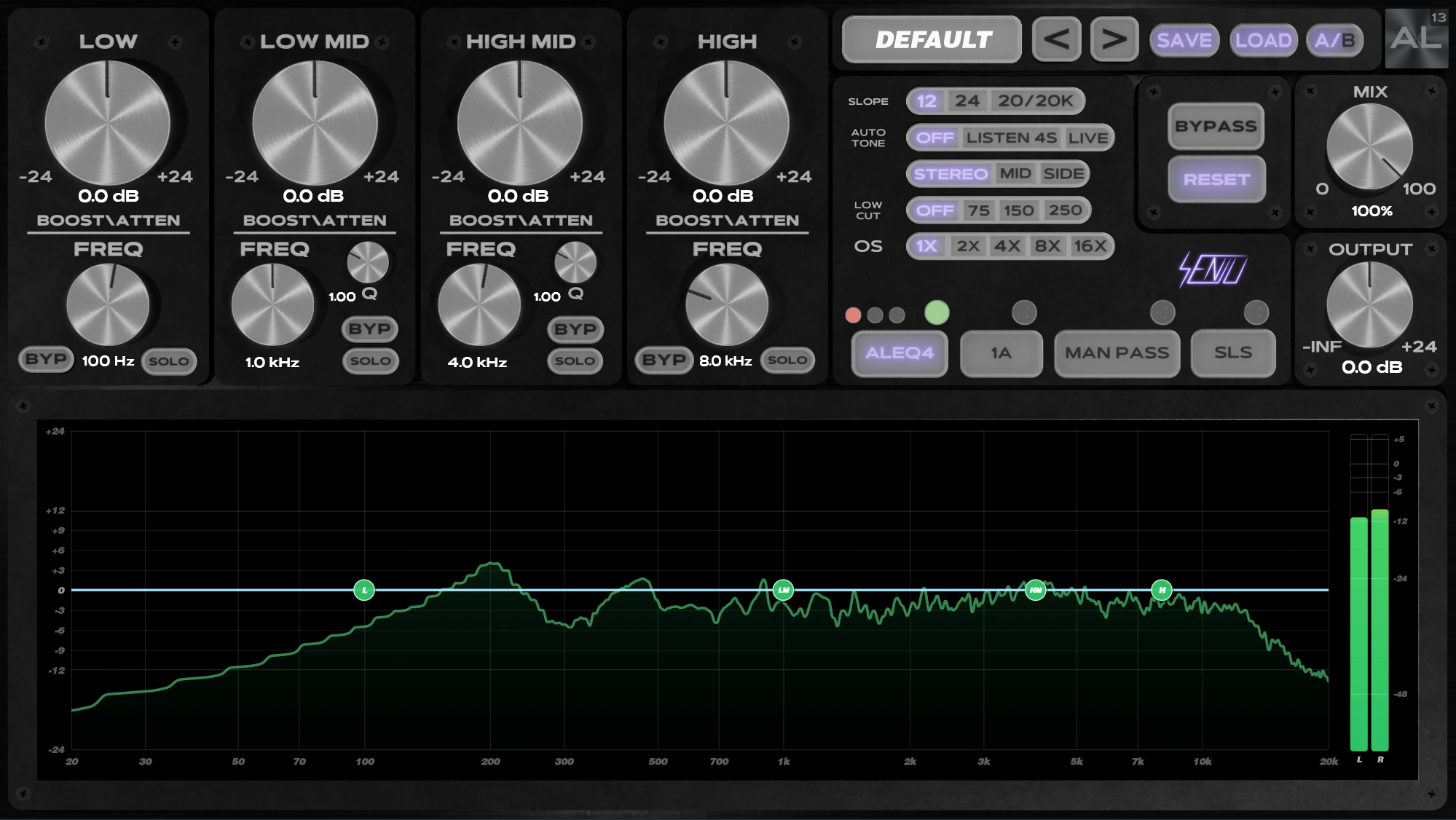
Switch between Stereo, Mid and Side directly from the main interface. Shape the center and side information independently, create space, control width and rebalance stereo material without complicated routing.
Musical Digital Equalizer
Musical Character. Digital Control.
A flexible digital EQ that combines broad musical curves, analog-modeled nonlinear behavior and a fast, consistent workflow for modern production.
Four processing personalities
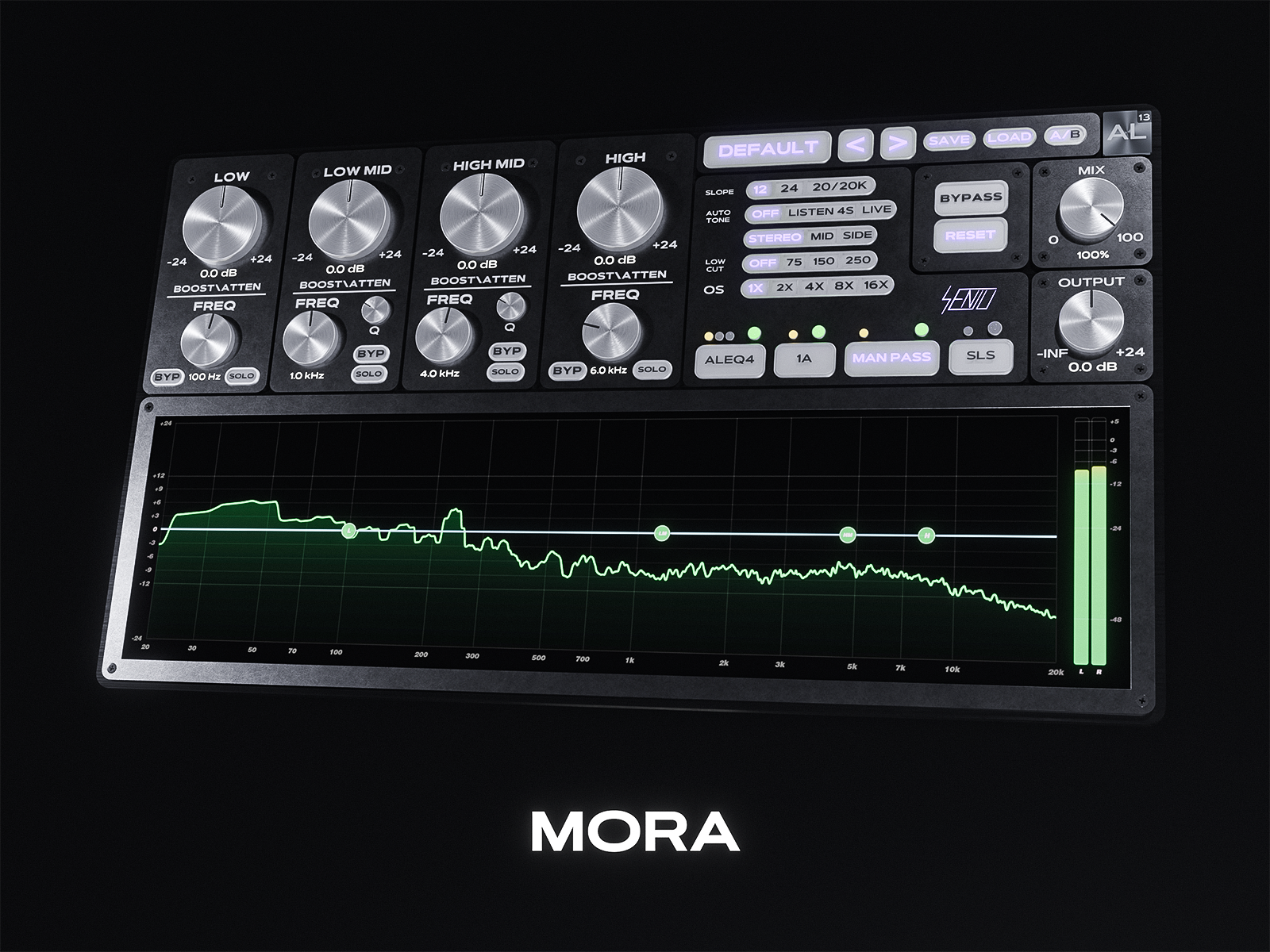
MORA combines digital precision and analog vibe in one focused workspace. Choose the flexible four-band mode for detailed control, or switch to one of three musical personalities designed for broad moves, expressive tone shaping and fast creative decisions.
Each mode changes more than the available bands. It changes the entire approach to equalization — from precise correction to rich tonal shaping.
Processing personality 01
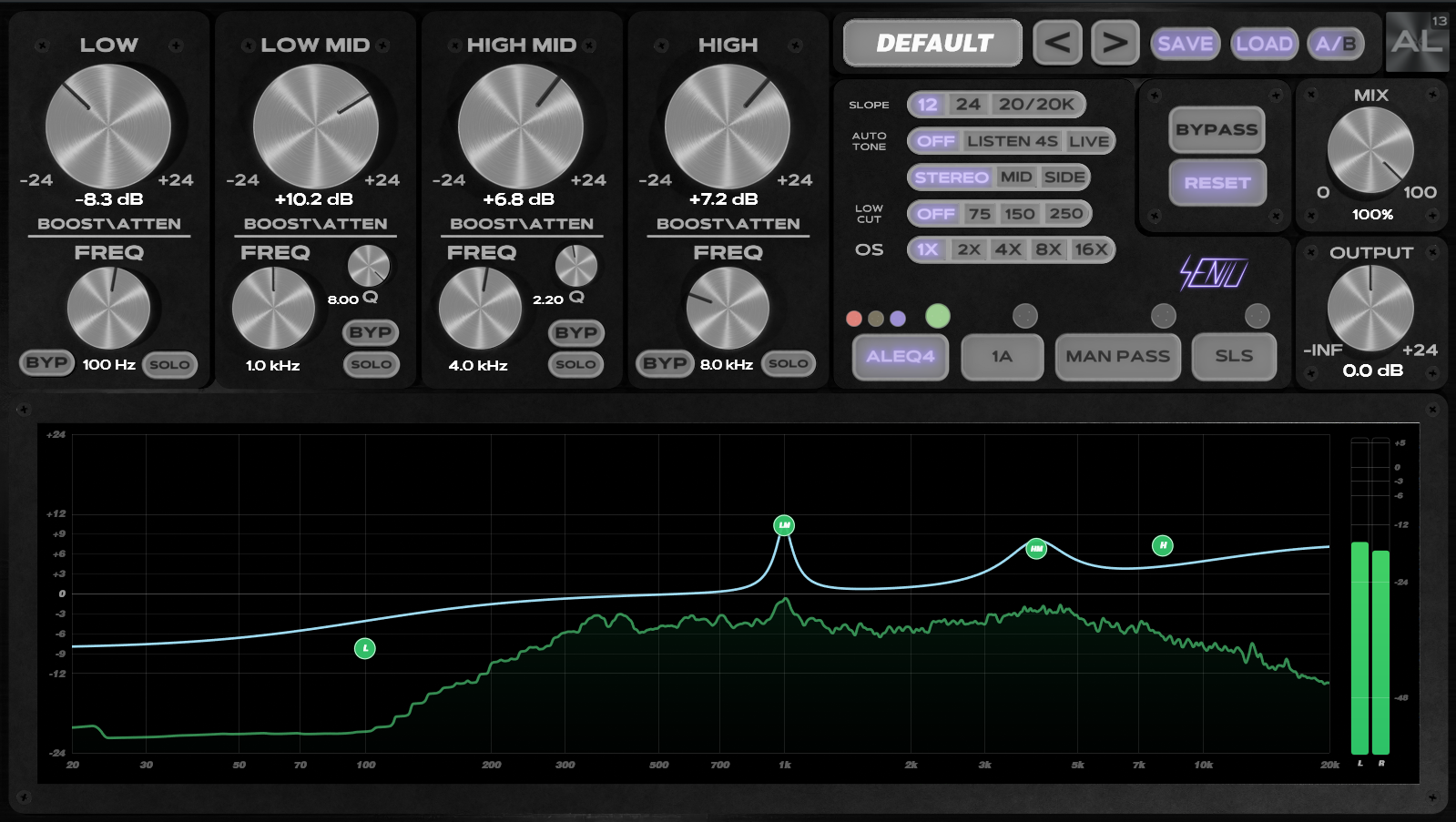
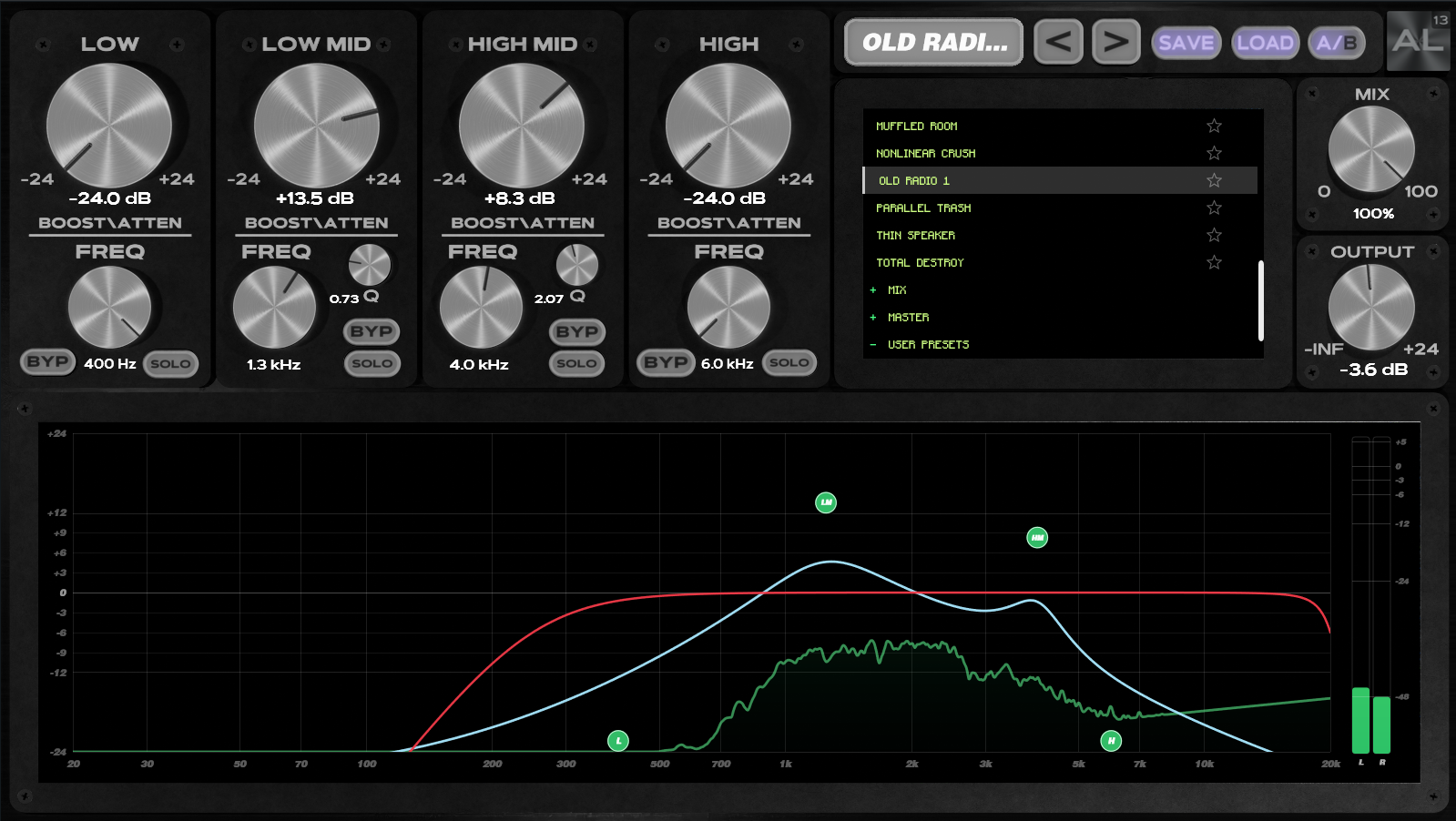
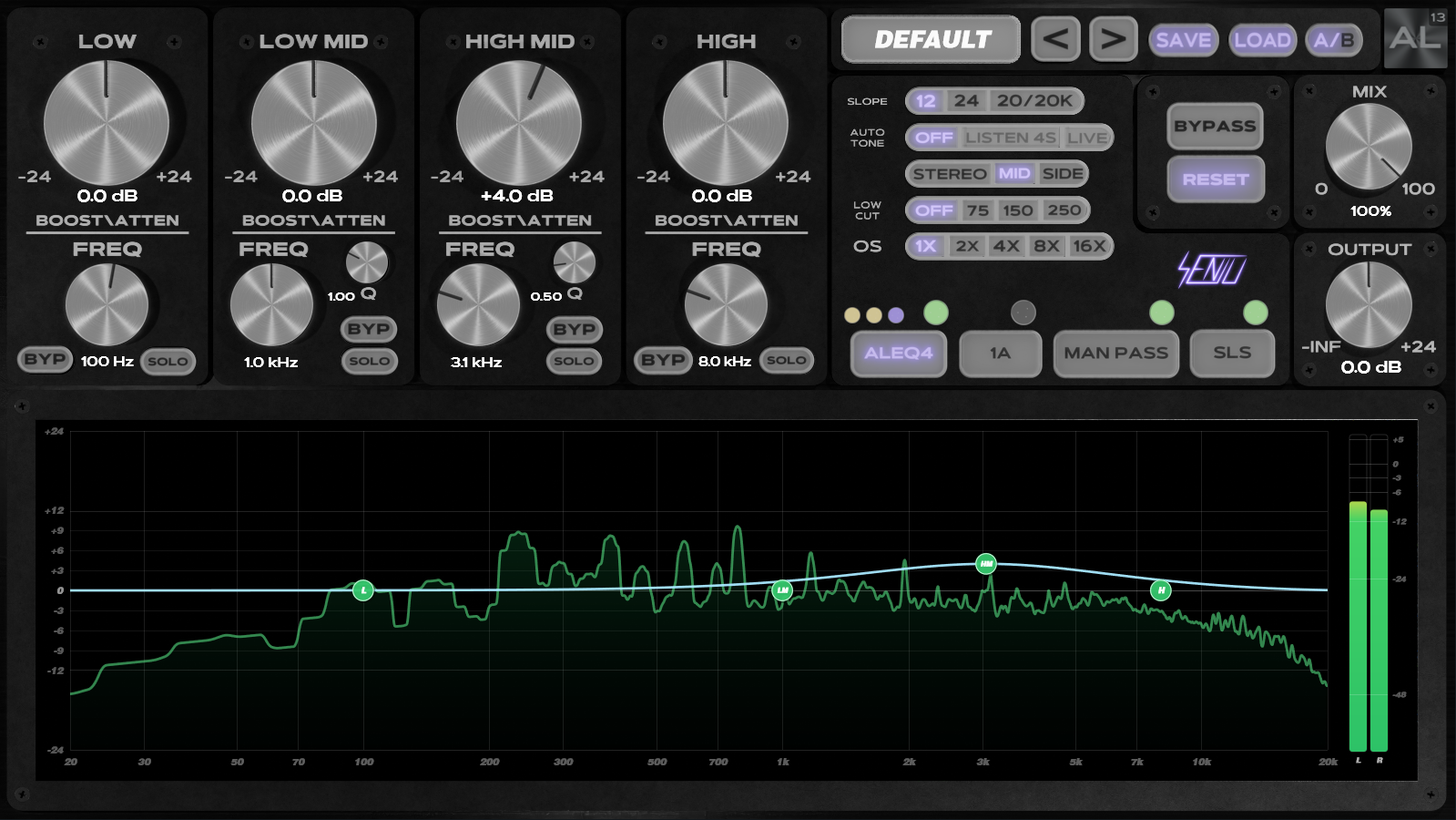
The main four-band mode is designed for situations that require complete control. Independent low, low-mid, high-mid and high-frequency sections let you shape the balance precisely while preserving a fast and intuitive workflow.
Every band can be bypassed or monitored in Solo, while the mid bands also provide adjustable Q control. The mode works equally well for subtle correction and expressive EQ curves.
Processing personality 02
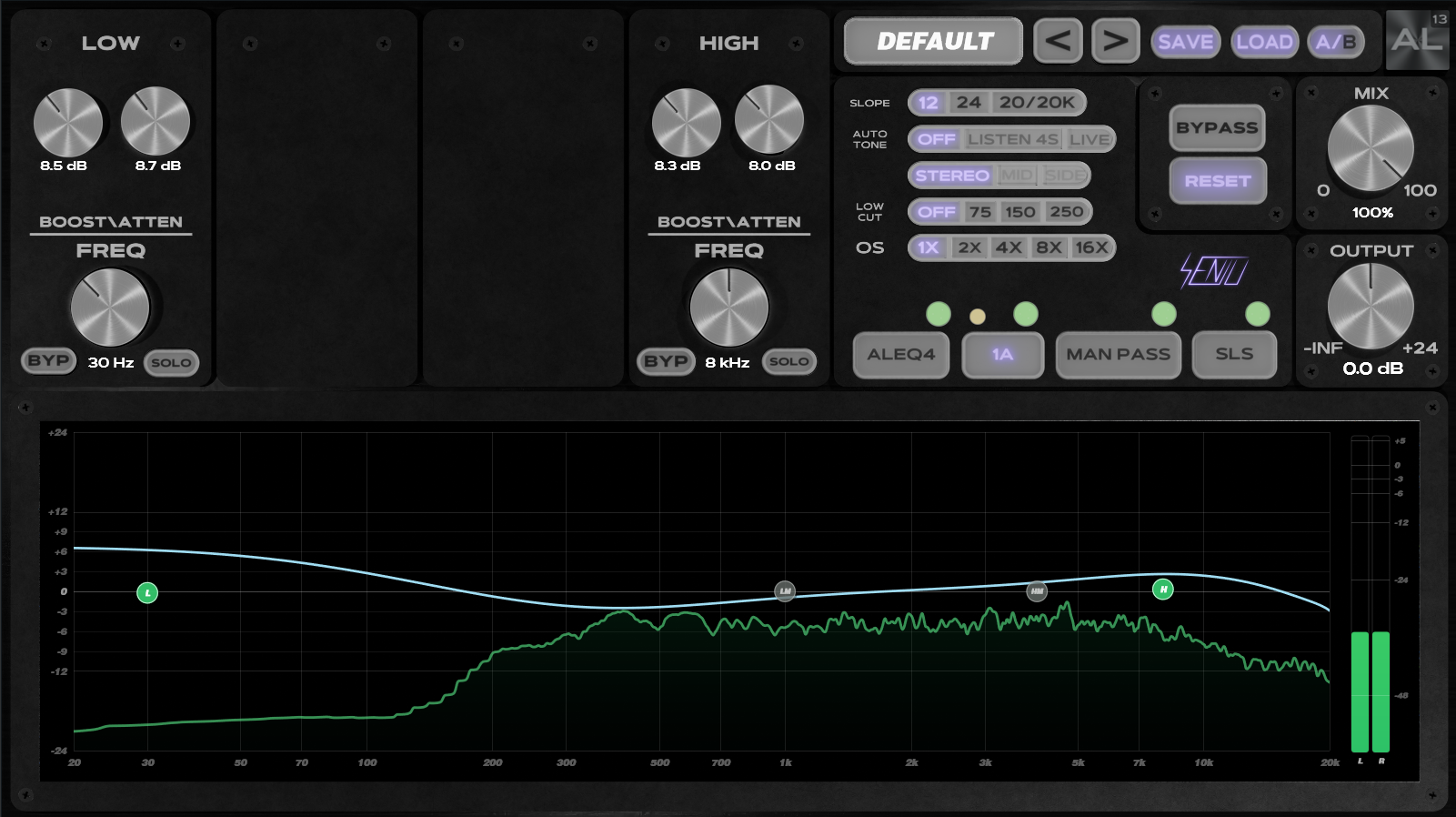
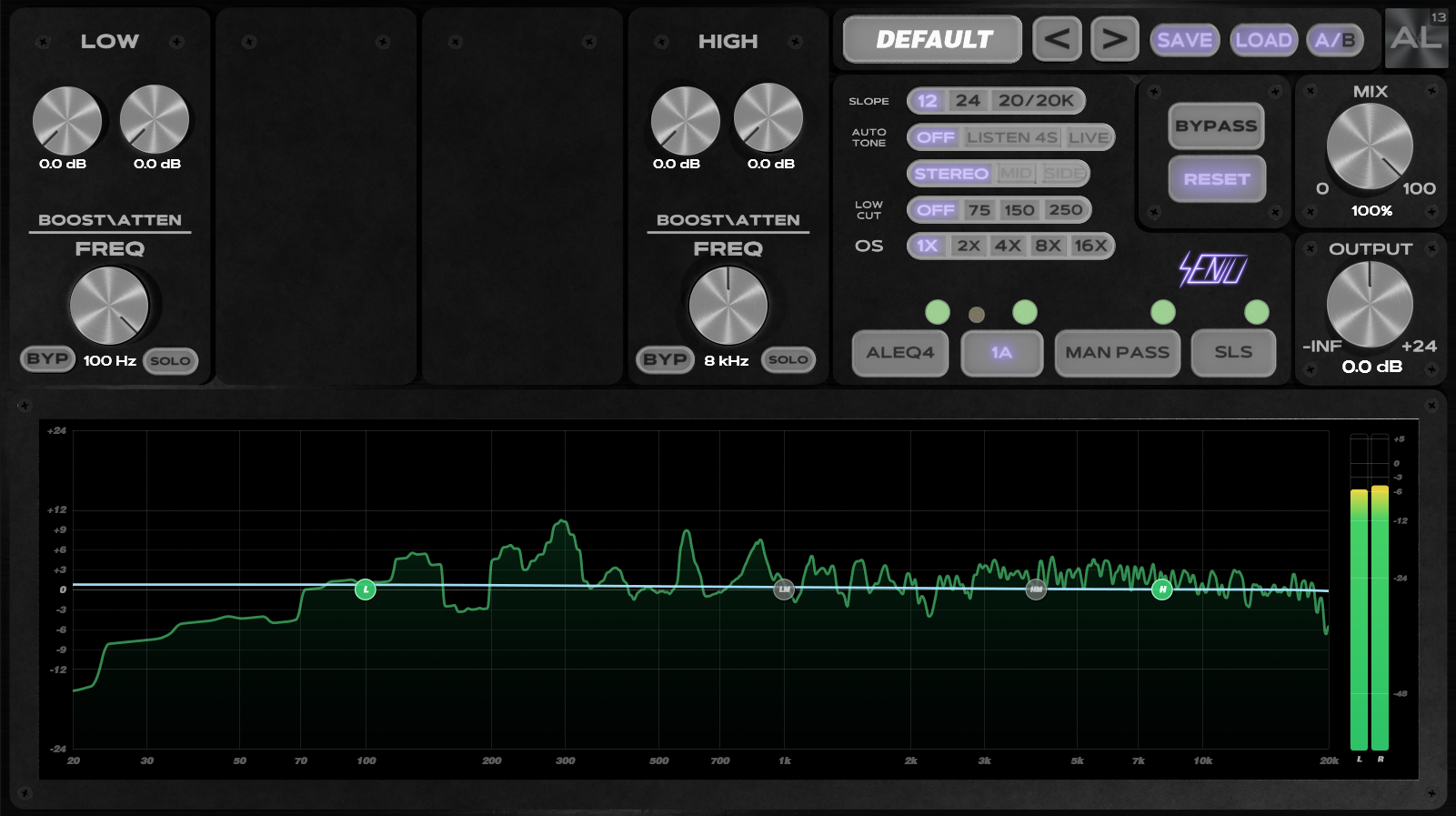
The two-band 1A mode is designed for broad, natural shaping of the low and high frequency ranges. It can boost and attenuate selected areas simultaneously, producing smooth curves and a distinctive interaction between enhancement and reduction.
Its analog coloration can be used as part of the tone-shaping process or disabled when only the clean musical EQ curves are required.
Processing personality 03
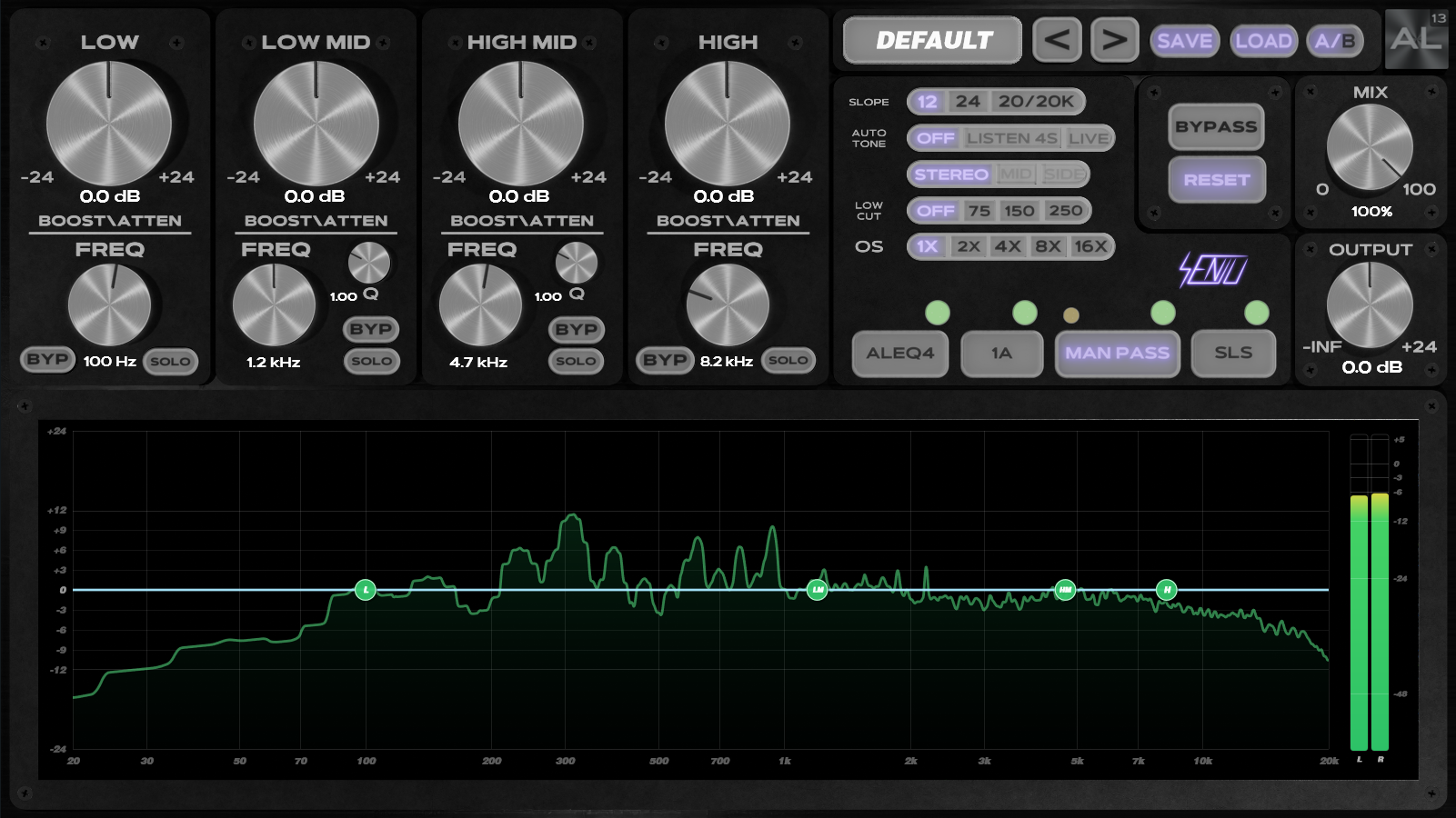
MAN PASS is designed for full-bodied, musical spectrum shaping. Its curves feel broad and interconnected, allowing substantial adjustments while preserving the coherence of the source.
This mode works especially well on buses, mastering chains and signals that need confident tonal rebalancing rather than surgical correction, with a smooth analog character.
Processing personality 04
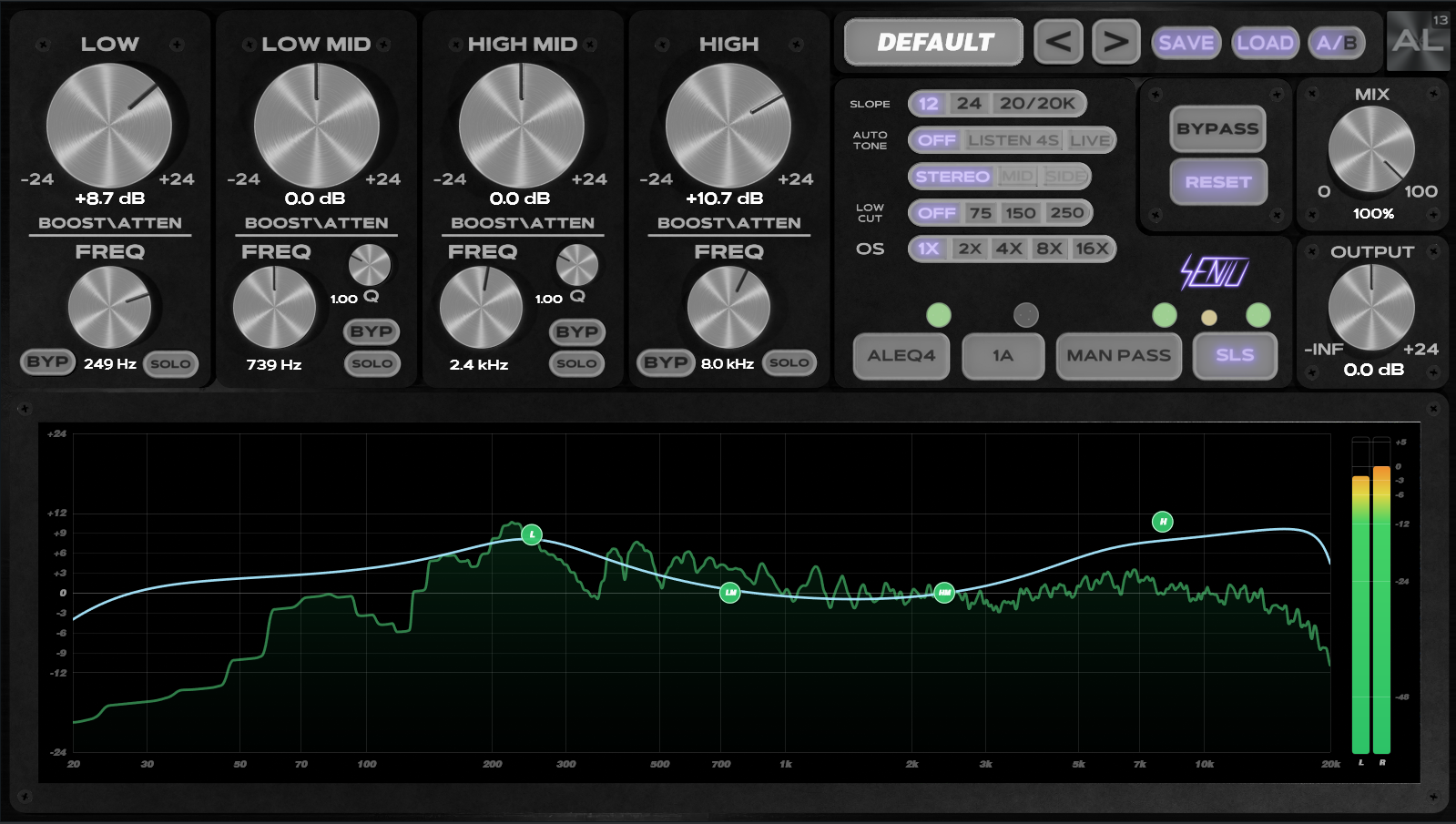
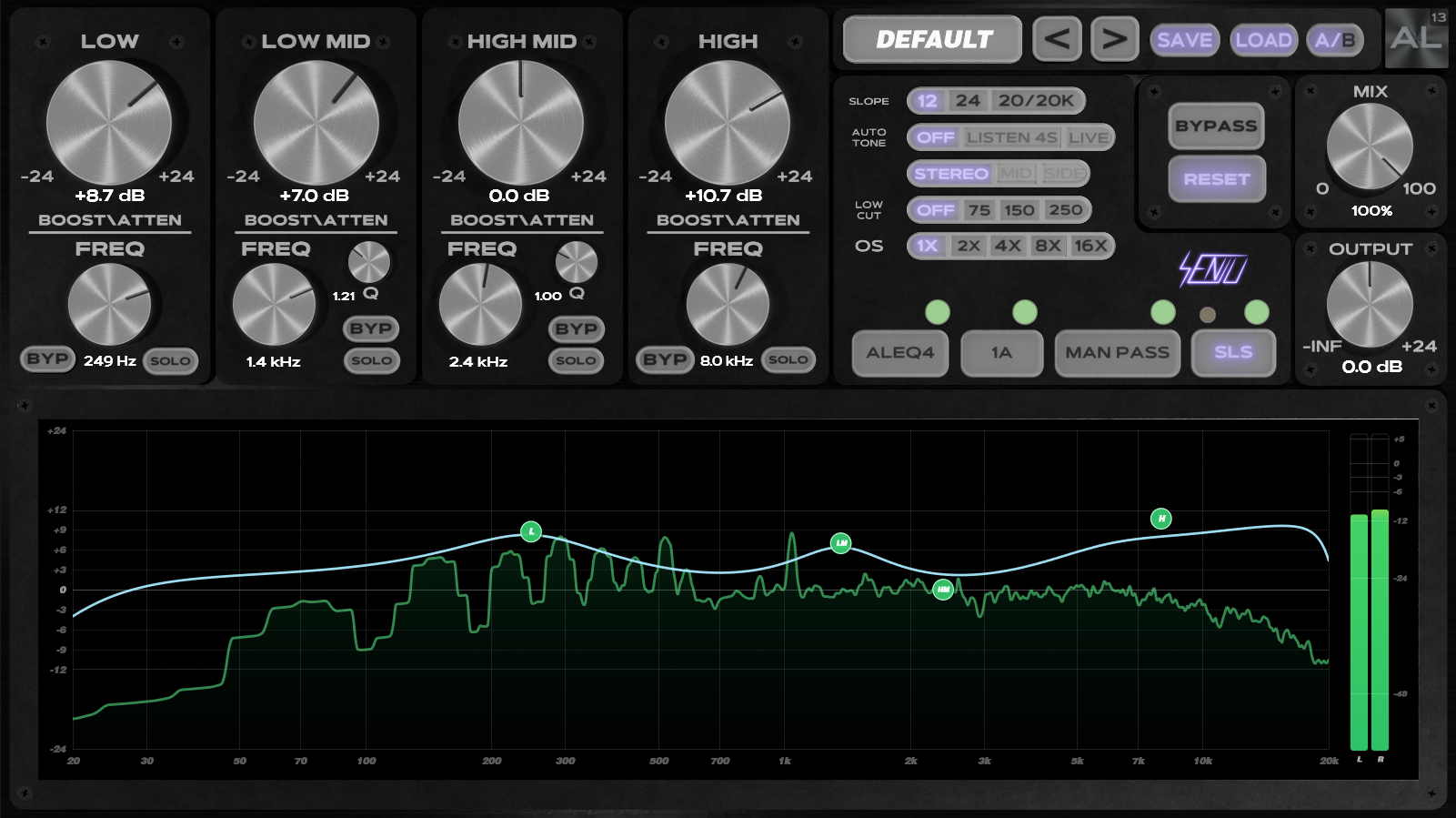
SLS offers a more direct, energetic and focused approach to equalization. It is built for fast decisions, enhancing attack, clearing the spectrum and placing a source confidently inside a mix.
Its curves remain musical while feeling tighter and more precise, making the mode useful for individual tracks, groups and situations where the desired result should appear without excessive tweaking.
Tonal character
MORA includes six nonlinear behaviors that change both the feel of the equalization and the way the plugin reacts to incoming material. These are not aggressive distortion effects, but musical tonal shades ranging from subtle density to a more pronounced character.
Nonlinearity can be used as part of the selected EQ mode or disabled completely whenever the cleanest possible processing is required.
Focused workflow
Switch between Stereo, Mid and Side directly from the main interface. Shape the center and side information independently, create space, control width and rebalance stereo material without complicated routing.
AUTO TONE
Auto Tone analyzes the frequency balance of the incoming signal and helps move it toward a built-in reference frequency-response target. In Listen 4S mode, the plugin analyzes the material for four seconds and then creates a corrective EQ curve based on that analysis. In Live mode, analysis runs continuously. The corrective curve updates in real time, follows changes in the signal and keeps working toward the reference frequency-response target. Auto Tone is not a replacement for manual equalization. It is an additional starting point and analysis tool that can be used together with the other MORA modes.
Each of the four bands can be enabled, bypassed and monitored in Solo independently. The integrated Low Cut removes unnecessary low-frequency content before the main processing, while additional mid-band controls provide more precise adjustment of the EQ curve width.
Choose the appropriate oversampling mode, from efficient 1× operation during real-time work to higher settings for final rendering and more precise nonlinear processing.
1× · 2× · 4× · 8× · 16×
Visual feedback
The integrated analyzer displays the spectrum and resulting EQ curve directly in the interface. Band nodes remain visually connected to the selected parameters, while the output meters help monitor level throughout the processing.
One focused interface
MORA does not force a choice between digital control and analog character. Four EQ modes, six nonlinear behaviors, Mid/Side processing, Auto Tone, filtering, oversampling and an integrated analyzer are combined in one interface for fast, deliberate decisions.
Overview
MORA pairs musical EQ curves with a nonlinear stage that responds to input level, source dynamics and the selected character mode. The result moves with the signal instead of applying a fixed layer of color.
It is built for producers, recording and mix engineers, mastering engineers, beatmakers, composers, arrangers and musicians who need broad tone shaping, fast recall and repeatable control across a project.
Design philosophy
MORA is designed around practical listening decisions rather than equipment nostalgia. Its curves encourage broad tonal movement, while digital recall and automation keep every choice easy to revisit.
The EQ response supports natural tonal movement as well as correction, making it useful when a source needs shape rather than a collection of narrow fixes.
Settings remain repeatable across revisions, automation passes, stems and recalled sessions, even when the nonlinear stage is adding character.
The analog-modeled behavior reacts to level and source dynamics. It is a controllable part of the processing path, not a fixed tonal stamp.
Shape the curve, select a character, manage level and continue listening. The interface is intended to reduce setup time, not add another layer of configuration.
Technology inside MORA
The architecture combines musical digital EQ curves, level-dependent nonlinear behavior, selectable character modes and a workflow designed to remain consistent from creation through final delivery.
Broad curve shapes support natural tone balancing on instruments, voices, buses and full mixes while retaining enough control for focused correction.
Each character mode changes the interaction between tonal movement and nonlinear response, so the same EQ setting can behave differently on different material.
The nonlinear stage reacts to input level, gain movement and source dynamics. This creates a dynamic harmonic response rather than static saturation pasted onto the signal.
Four character modes provide different relationships between the EQ curves and modeled saturation, ranging from restrained shaping to a more audible harmonic response.
Mid/Side processing allows separate tonal decisions for center and side information on stereo recordings, buses and masters.
Oversampling quality modes are planned to reduce unwanted aliasing in the nonlinear path when a project calls for higher processing quality.
MORA is designed to remain practical when used across multiple tracks, instruments and buses in dense or revision-heavy sessions.
Fast recall, automation and consistent gain decisions keep the analog-modeled behavior manageable inside a modern DAW session.
Workflow
MORA moves between corrective EQ, broad tone shaping and controlled harmonic processing without forcing a change of tools at each stage of a project.
Shape vocals, drums, bass, guitars, synths, samples and recorded instruments when a part needs faster tonal balance or a more responsive harmonic contour.
Broad curves and selectable character modes can rebalance grouped material, clarify an arrangement or add controlled density without breaking recall.
Repeatable controls and Mid/Side processing support restrained full-mix adjustments where small tonal moves and stereo balance both matter.
More assertive character settings can introduce audible harmonic movement when a beat, instrument or arrangement needs a stronger tonal direction.
Lower drive levels can add density and contour while leaving the source dynamics and arrangement clearly readable.
Stable digital controls make repair and balancing moves easy to recall, refine and automate later in the project.
Use cases
The same processing path can support writing, recording, arrangement, mixing and mastering when tonal shape, harmonic response and repeatability all matter.
Balance sources and buses with musical curve movement, fast recall and controllable nonlinear behavior.
Make restrained full-range and Mid/Side adjustments while keeping level comparisons and revisions consistent.
Adjust presence, body and tonal balance while keeping settings easy to match across takes and revisions.
Shape close microphones, overheads, samples or drum buses with level-dependent saturation and broad tonal control.
Control brightness, low-end balance and harmonic movement in layered electronic arrangements.
Balance low-frequency weight and midrange definition while keeping the response consistent across notes.
Apply broad tonal movement and controlled harmonic density to grouped material or a complete mix.
Make careful full-range adjustments where gain judgment, stereo behavior and reliable recall all matter.
Key features
The feature set connects musical tone shaping, dynamic harmonic response and practical digital control in one repeatable workflow.
Each mode changes the relationship between curve response and nonlinear behavior, providing several distinct ways to shape the same source.
The modeled input stage responds to signal level, so restrained settings and driven settings produce different harmonic movement.
Controlled saturation can add density and contour while preserving the useful shape of the source.
Auto Tone analyzes frequency balance in Listen 4S or Live mode and creates a corrective EQ curve toward its built-in reference target.
Curve and signal feedback provide a quick reference while keeping listening at the center of the decision.
Controls are arranged for fast, repeatable moves on instruments, voices, buses, stems and complete mixes.
Character modes
The modes offer practical changes in curve interaction and nonlinear response rather than decorative color for its own sake.
A balanced response for broad tonal movement and controlled corrective shaping.
A firmer response for presence, definition and clearer source focus.
A smoother contour for grouped material, stems and restrained full-mix adjustments.
A more assertive nonlinear response when a source needs stronger harmonic movement.
Read full overview
A closer look at how MORA shapes tone, responds to level and fits into different stages of music production.
MORA is a digital equalizer for producers, recording and mix engineers, mastering engineers, beatmakers, composers, arrangers and musicians. It supports tonal decisions that need to remain musical, fast to recall and easy to revise.
Its responsive character comes from broad curve behavior, mode-dependent processing and a nonlinear stage that reacts to level and source dynamics. Recall, automation and parameter control remain fully digital.
The engine changes its harmonic response as input level, gain and source dynamics change. Restrained settings can remain subtle, while stronger settings introduce more audible density and level-dependent saturation.
Multiple character modes let the same curve interact with the signal in different ways. One mode can remain restrained and corrective, while another can produce a stronger dynamic harmonic response.
Mid/Side processing supports stereo recordings, buses and masters where center information and side energy need different tonal treatment.
Oversampling modes are planned to reduce unwanted aliasing in the nonlinear path. When gain compensation is enabled, tonal and harmonic changes are easier to judge without being led by loudness alone.
Use MORA to rebalance an instrument, shape a vocal, control a sample, add harmonic density to a bus or make restrained tonal changes on a master. The workflow is designed to remain practical across repeated instances.
Typical uses include broad instrument shaping, vocal balance, drum and mix-bus control, sample and synth contour, stereo adjustment and mastering moves that need character without losing repeatability.
Technical specifications
The current specification outline separates confirmed processing behavior from quality and compatibility details that will be finalized with the release build.
Supported versions will be published after release-build validation.
Supported versions will be published after release-build validation.
Final format status will be published with the installers.
Final format status will be published with the installers.
System requirements
Final requirements will list supported operating systems, host notes, authorization details and recommended processing settings.
FAQ
Current answers for producers, engineers and musicians evaluating MORA before release.
Yes. MORA will be available as a free 15-day trial before purchase. The trial will let you properly evaluate the workflow, EQ modes and processing character in your own projects.
The initial MORA release is planned for VST3 and AU. Additional formats may be added later as the product develops.
Supported operating systems and minimum requirements will be published before release. We recommend checking compatibility with your system and plugin format before installing the trial or full version.
After purchase, the license will be linked to your AliasingLabs account. The account page will show the license status, available downloads and the number of activations in use.
Documentation
View the complete update history, changes and improvements for this plugin.
Coming soon
Sales are not open yet